
Discover the role of case interview coaching for adults. Learn how tailored training boosts your consulting interview success with practical skills.
On this page▾
- How does case interview coaching improve consulting interview readiness for adults?
- What makes effective case interview coaching for adults distinct from generic interview prep?
- What challenges do adults face in case interviews, and how does coaching address them?
- How do you choose the right case interview coaching program as an adult?
- Key Takeaways
- What I've learned from watching adults prepare for consulting interviews
- Frame-lab's resources for adult consulting candidates
- FAQ
- What is case interview coaching?
- How do I prepare for a case interview as an adult?
- How many coaching sessions do adults typically need?
- Why do candidates fail final rounds despite strong preparation?
- What should I look for in a case interview coach?
- Recommended
Case interview coaching is defined as personalized, interactive training that prepares adult candidates to think clearly, structure problems, and communicate effectively under the pressure of real consulting interviews. Unlike generic interview prep, this form of professional coaching replicates actual McKinsey and BCG interview conditions through repeated mock cases and structured feedback. The role of case interview coaching for adults goes well beyond memorizing frameworks. It builds the judgment, adaptability, and communication clarity that top consulting firms actually evaluate. If you are preparing for a consulting interview, understanding what quality coaching delivers and how to find it is the most direct path to a real offer.
How does case interview coaching improve consulting interview readiness for adults?
Coaching develops the specific skills that consulting interviews test, and it does so through practice rather than passive study. Case interview coaching involves paid one-on-one sessions with experienced coaches who simulate real consulting interviews and give targeted feedback to improve candidate performance. That simulation is the key mechanism. You cannot build interview presence by reading about it.
Good coaching teaches you to break down unfamiliar problems calmly and communicate clearly under pressure. The focus is on judgment and structure, not scripted answers. Candidates learn to pause, think, and lay out clean approaches with clarity and confidence. That skill transfers directly to the interview room.
Here is what effective coaching builds in adult candidates:
- Problem structuring under pressure. You learn to organize your thinking quickly, even when a case prompt is unfamiliar or ambiguous.
- Hypothesis-driven thinking. Coaching trains you to lead with a direction and test it, rather than waiting until you have "enough" information.
- Confidence with unexpected twists. Interactive mock interviews simulate real consulting cases, including handling interruptions, follow-ups, and shifting case directions.
- Verbal clarity and concision. You practice saying more with fewer words, which is exactly what interviewers reward.
- Real-time judgment. Coaching replaces the habit of reciting memorized structures with the ability to think live and adapt.
Pro Tip: Record your mock interview sessions whenever possible. Watching yourself back reveals verbal habits and pacing issues that neither you nor your coach will catch in the moment.
What makes effective case interview coaching for adults distinct from generic interview prep?
Generic interview prep teaches you how to answer questions. Case interview coaching teaches you how to think. That distinction matters because consulting firms evaluate your reasoning process, not just your conclusions. The quality and consistency of coaching feedback determines how fast you improve.
Practice quality with consistent feedback outweighs volume or coach prestige in accelerating candidate readiness. Doing fifty cases with vague feedback produces slower progress than doing twenty cases with precise, rubric-aligned feedback. This is the most common mistake adult candidates make when preparing on their own.
Effective coaching programs for adults share several defining features:
- Standardized feedback rubrics. Effective coaches use the same rubric and shared feedback language to offer objective evaluations, improving student progress and consistency across sessions. This prevents mixed messages and the formation of bad habits.
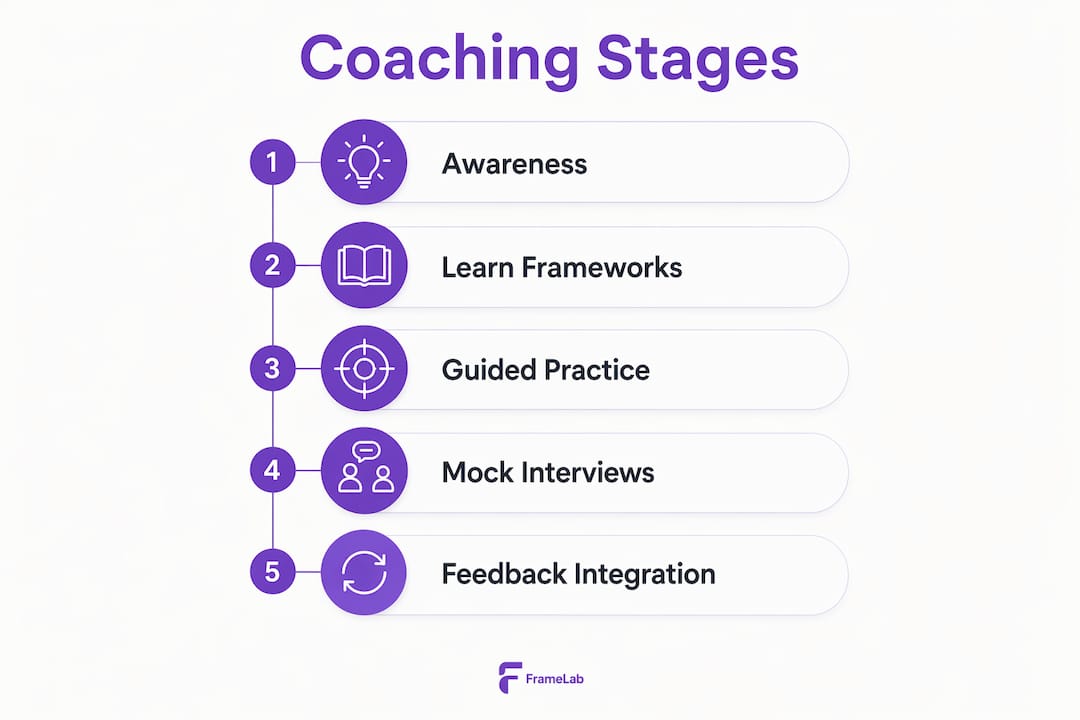
- Staged progression. Case interview preparation benefits from a structured approach: awareness, framework building, guided practice, and independent performance. Skipping stages creates gaps that show up in final rounds.
- Virtual interview training. Virtual case interview practice requires specific training to handle remote communication challenges and professional presence effectively. Most top firms now use virtual formats for at least part of their process.
- Realistic case simulation. The best coaching sessions feel like actual interviews, not tutorials. The coach plays the role of an interviewer, not a teacher.
- Feedback that targets execution, not effort. Praise without specificity does not improve performance. Coaching should tell you exactly what to do differently and why.
Pro Tip: Before your first coaching session, review the case interview preparation stages so you arrive knowing where you are in the readiness progression. Coaches can then calibrate their feedback to your actual level.
What challenges do adults face in case interviews, and how does coaching address them?
Adult candidates bring real professional experience to consulting interviews. That experience is an asset in fit interviews but can create specific blind spots in case interviews. Coaching addresses these directly.

Candidates need realistic practice environments to reduce anxiety and avoid pitfalls like freezing under pressure during interviews. Coaching builds interview presence and stress management through repeated realistic practice. Adults who have not been in high-stakes interview settings recently often underestimate how much anxiety affects their live performance.
The most common challenges adult candidates face, and what coaching does about each:
- Anxiety under pressure. Repeated mock interviews in realistic conditions reduce the novelty of the experience. The more you have been in that situation, the calmer you perform.
- Strong resume, weaker live performance. Many adults with impressive backgrounds struggle to translate their experience into the structured, concise communication consulting interviews demand. Coaching closes that gap through direct practice.
- Over-reliance on memorized frameworks. Adults who study independently often learn frameworks as scripts. Coaching forces you to apply them flexibly, which is what interviewers actually test.
- Mental math fluency. Case interviews require fast, accurate mental calculation. Coaching sessions include math drills and feedback on how you communicate your calculations out loud.
- Listening and interaction. Consulting interviews are conversations, not presentations. Coaching trains you to listen for cues, ask clarifying questions, and adjust your approach mid-case.
You can also review why case interviews cause stress to understand the psychological patterns at play before your first session. Awareness alone reduces their impact.
How do you choose the right case interview coaching program as an adult?
The coaching market ranges from informal peer practice to structured programs built by former McKinsey and BCG consultants. Choosing the wrong option wastes time and can reinforce bad habits. The right choice depends on where you are in your preparation and what kind of feedback you need.
Coach experience, including former consulting roles, and the ability to provide clear, actionable feedback strongly influence coaching effectiveness. Experienced coaches provide guidance aligned with current interviewing standards. A coach who has never sat on the other side of the table cannot tell you what interviewers actually notice.
Evaluate any coaching option against these criteria:
| Criterion | What to look for |
|---|---|
| Coach background | Former consultant or trained interviewer with recent firm experience |
| Feedback quality | Specific, rubric-based, and tied to interviewer evaluation criteria |
| Session format | Live mock interviews, not just tutorials or video lessons |
| Curriculum structure | Staged progression from awareness through independent performance |
| Schedule flexibility | Sessions that fit around your current job or commitments |
| Virtual readiness | Training that addresses remote communication and professional presence |
Adults balancing careers need coaching that respects their time. A program that offers flexible scheduling and focused sessions produces better results than one requiring you to block out weeks of full-time study. Frame-lab's platform is built with that constraint in mind, offering structured learning paths that fit around professional schedules.
Pro Tip: Ask any coach to describe the rubric they use to evaluate your performance. If they cannot name specific criteria, their feedback will be inconsistent and hard to act on.
Key Takeaways
Effective case interview coaching for adults accelerates readiness by combining realistic mock interviews, standardized feedback, and staged skill progression rather than relying on volume of practice alone.
| Point | Details |
|---|---|
| Coaching builds live judgment | Coaching replaces scripted answers with the ability to think and adapt in real time. |
| Feedback quality drives progress | Standardized rubrics and consistent coaching language produce faster improvement than high-volume practice without structure. |
| Adults face specific challenges | Anxiety, over-reliance on frameworks, and weak live communication are the most common gaps coaching closes. |
| Staged progression matters | Moving through awareness, framework building, guided practice, and independent performance prevents execution gaps in final rounds. |
| Coach experience is non-negotiable | Former consultants or trained interviewers provide feedback aligned with what firms actually evaluate. |
What I've learned from watching adults prepare for consulting interviews
Most adults who come to case interview preparation with serious professional backgrounds make the same mistake. They treat it like an exam. They study frameworks, memorize structures, and then wonder why they freeze or ramble when a coach throws them an unexpected prompt.
The candidates who improve fastest are the ones who accept early that the case interview is not a knowledge test. It is a performance test. You are being evaluated on how you think out loud, how you handle uncertainty, and how you communicate with someone who is actively probing your reasoning. No amount of silent studying prepares you for that. Only realistic, repeated practice does.
I have seen candidates with weaker resumes outperform stronger candidates in final rounds because they put in the right kind of practice. They did fewer cases, but each one came with precise feedback they actually acted on. That pattern holds across every level of preparation I have observed.
The other thing I would tell any adult preparing right now: do not wait until you feel "ready" to start mock interviews. The discomfort of early sessions is the point. Peer practice and coached sessions both work best when you start before you feel confident, because that is when the feedback is most revealing and most useful.
Quality over quantity is not a cliché in this context. It is the actual mechanism of improvement.
Frame-lab's resources for adult consulting candidates
Frame-lab is built specifically for candidates preparing for McKinsey, BCG, and other top-tier consulting interviews. The platform combines AI-driven mock interviews, over 400 curated experience reports from real interviews, and structured learning paths that adapt to your strengths and weaknesses.
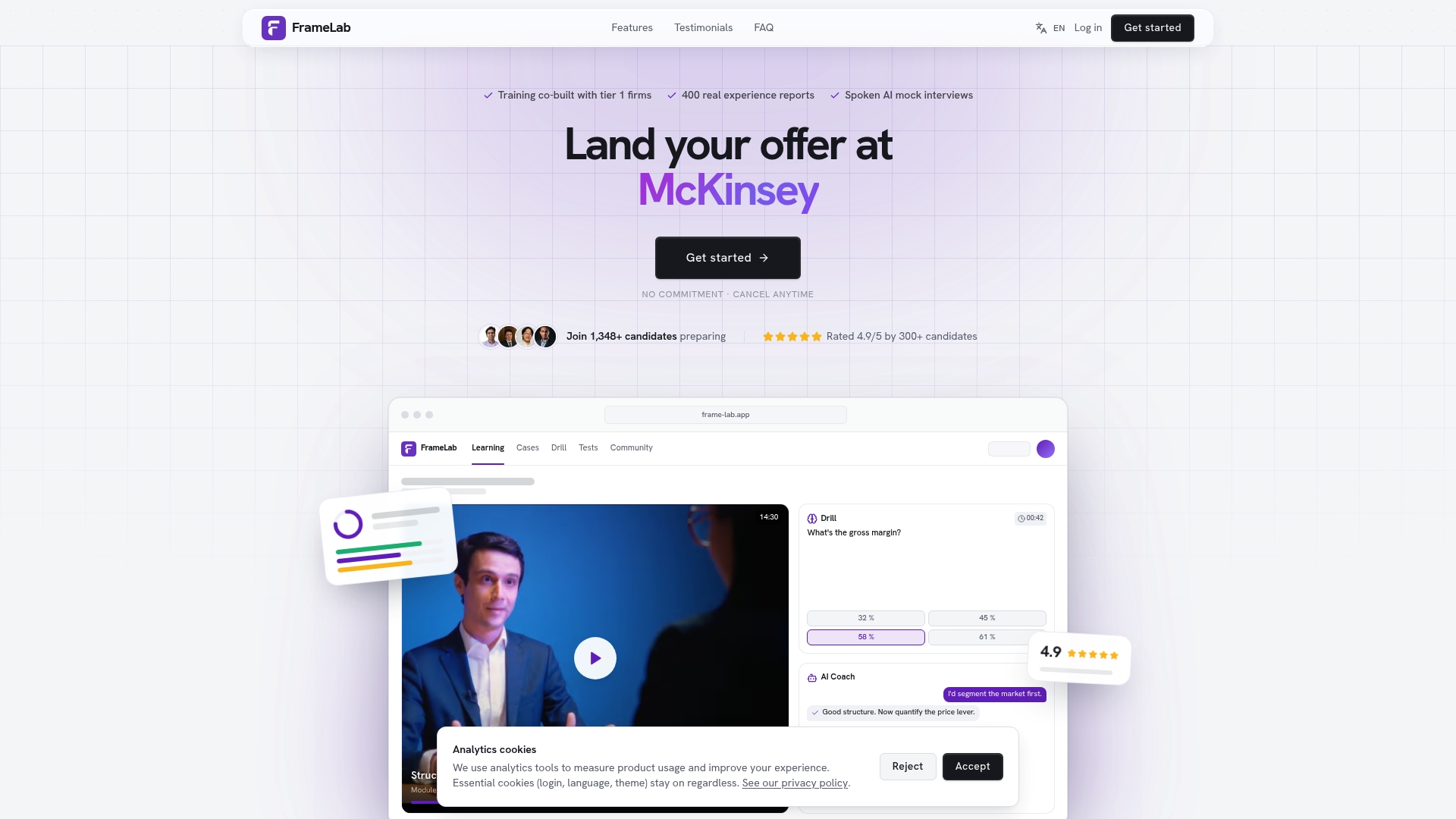
Adult candidates balancing careers benefit from Frame-lab's flexible, self-paced modules covering core consulting frameworks and advanced case analysis. The platform's feedback mechanisms are aligned with actual interviewer evaluation criteria, so you practice the way firms assess. If you are ready to move from preparation to performance, land your consulting offer with a structured program built around how top firms actually hire.
FAQ
What is case interview coaching?
Case interview coaching is personalized, one-on-one training where an experienced coach simulates real consulting interviews and gives structured feedback to improve your thinking, communication, and case performance.
How do I prepare for a case interview as an adult?
Start with a staged approach: build awareness of the format, learn core frameworks, practice with guided feedback, then move to independent mock interviews. Coaching accelerates each stage by providing objective, rubric-based evaluation.
How many coaching sessions do adults typically need?
The number varies by starting level, but practice quality outweighs volume. Focused sessions with precise feedback produce faster results than a high number of sessions with vague guidance.
Why do candidates fail final rounds despite strong preparation?
Candidates often fail final rounds due to small execution gaps in communication clarity, structure, or business judgment. Coaching closes these gaps through direct, targeted feedback after each mock case.
What should I look for in a case interview coach?
Prioritize former consultants or trained interviewers who use a clear feedback rubric. The coach should offer live mock interviews, not just tutorials, and provide feedback tied to specific interviewer evaluation criteria.