
Discover the role of community support in interview prep. Enhance your strategy and reduce anxiety with peer collaboration for consulting success.
On this page▾
- How does community support reduce interview anxiety?
- What is the tactical value of community in curating prep resources?
- How do communities simulate real consulting interview conditions?
- Practical strategies for engaging community support effectively
- Key Takeaways
- What I've learned from watching candidates use community prep
- Frame-lab's approach to community-driven consulting prep
- FAQ
- What is the role of community support in interview prep?
- How many mock interviews should I do with community partners?
- How does community support help with behavioral interview questions?
- How do I find the right community for consulting interview prep?
- Can community support replace structured prep tools?
- Recommended
Community support in interview preparation is defined as the collective practice of peers sharing resources, conducting mock interviews, and providing emotional encouragement to help candidates perform at their best. For graduate students and job seekers targeting consulting roles at firms like McKinsey and BCG, this support is not optional. The role of community support in interview prep spans three distinct functions: reducing anxiety, filtering preparation resources, and simulating real interview conditions. 70% of candidates spend at least 2 months preparing for interviews, and those who rely on community networks consistently refine their strategy faster than those who prepare alone. Consulting interviews involve multiple stakeholders, complex case structures, and behavioral questions that demand both confidence and precision. Community practice addresses all three demands simultaneously.
How does community support reduce interview anxiety?
Interview anxiety is not a mindset problem. It is a preparation gap. When you face a McKinsey or BCG panel without having practiced under realistic pressure, your body responds to the unknown with stress. Community groups close that gap by providing immediate, targeted mock interview practice with peers who understand the format.
Peer-led support groups function as informal accountability engines. One documented case shows a job seeker completing 40 mock interviews over six weeks through community networks, which directly resulted in a job offer. That volume of practice is nearly impossible to achieve alone. Each session builds familiarity with the format, and familiarity is the single most effective antidote to anxiety.
Community feedback also changes how you process failure. Reframing setbacks as learning opportunities fosters a growth mindset that is critical for enduring long consulting interview cycles. Without that reframe, a poor mock performance can derail weeks of preparation. With it, the same performance becomes a diagnostic tool.
The speed of community response matters too. In high-pressure situations, mock interview support can arrive within 19 minutes of a candidate requesting it. That kind of rapid access to practice partners is what separates community-backed preparation from solo study.
Key benefits of community support for anxiety reduction:
- Immediate practice access: Peers are available across time zones, removing scheduling barriers to mock sessions.
- Diverse interviewer personas: Community members simulate different interviewer styles, reducing surprise during actual panels.
- Emotional reinforcement: Encouragement from peers who share the same goal sustains motivation during long prep cycles.
- Accountability structures: Scheduled sessions with partners create commitment that solo prep cannot replicate.
- Failure reframing: Group debriefs turn weak performances into specific, fixable skill gaps.
Pro Tip: Schedule at least two mock interviews per week with different community partners. Rotating partners exposes you to varied questioning styles, which mirrors the unpredictability of real consulting panels.
What is the tactical value of community in curating prep resources?

Information overload is one of the most underrated obstacles in consulting interview preparation. Hundreds of case books, framework guides, and prep courses exist, and most candidates waste weeks evaluating options instead of practicing. Community support acts as a credibility filter, cutting that evaluation time significantly.
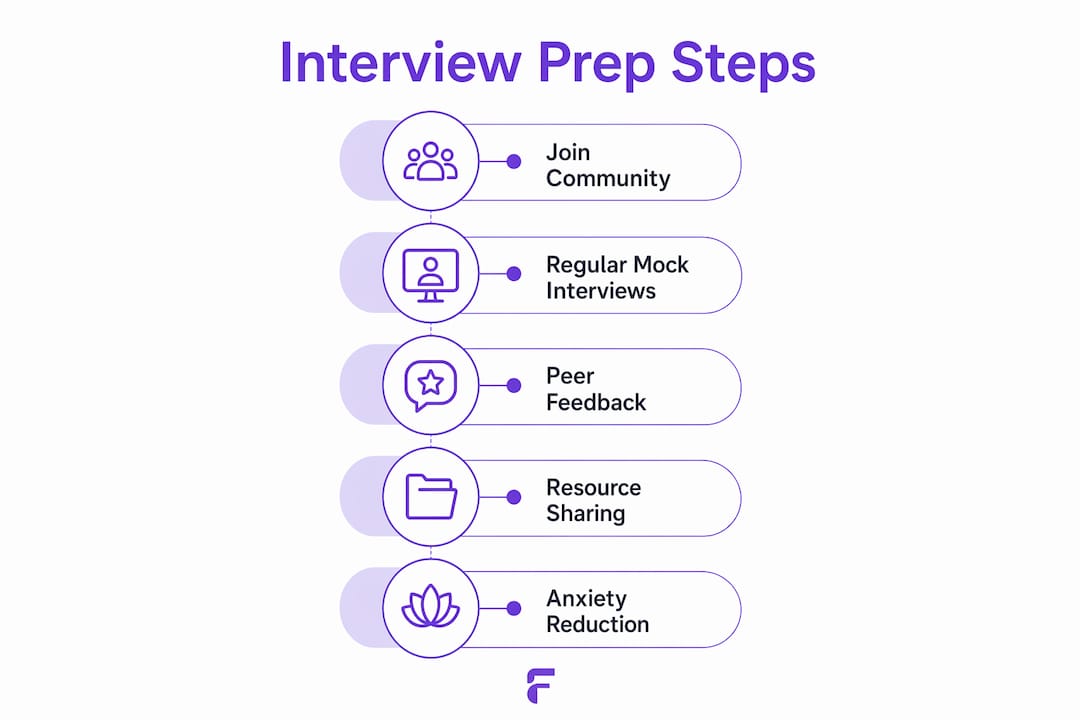
Community-sourced prep guides are updated annually, which matters because consulting interview formats evolve. A guide that was authoritative three years ago may miss current firm-specific expectations. Peers who recently completed McKinsey or BCG interviews share firsthand updates that no static resource can match.
Community networks filter resources by seniority level, which is a function most candidates overlook. A first-year MBA student needs different prep depth than a candidate with five years of industry experience. Community members who have already gone through the process can point you to the right materials for your specific profile.
The most effective approach to resource curation through community follows a clear sequence:
- Identify your target firms first. Ask community members who interviewed at those specific firms which resources they used. Generic recommendations waste time.
- Cross-reference at least three community sources. One person's experience is anecdote. Three consistent recommendations signal a reliable resource.
- Filter by recency. Prioritize resources shared by candidates who interviewed within the past 12 months.
- Separate framework guides from behavioral prep. Communities often conflate the two. Treat them as distinct preparation tracks.
- Contribute your own findings. Sharing what works builds your reputation in the community and deepens your own understanding through explanation.
The peer review function of community networks saves candidates from investing time in low-quality materials. That saved time goes directly into practice, which is where consulting interview skill is actually built.
How do communities simulate real consulting interview conditions?
Consulting interviews rarely involve a single interviewer asking straightforward questions. Candidates often face 6 - 8 stakeholders across multiple rounds, each with a different focus and communication style. Community practice replicates this complexity in ways that solo preparation cannot.
Peer groups assign rotating roles during mock sessions. One partner plays a skeptical interviewer, another plays a supportive one, and a third observes and scores. This role distribution mirrors the actual panel dynamic at top consulting firms. Candidates who have practiced against varied personas enter real interviews with a calibrated sense of what to expect.
The STAR method (Situation, Task, Action, Result) is the standard framework for behavioral questions, and community groups emphasize STAR as the baseline structure for every behavioral response. Practicing STAR answers in front of peers who can challenge your logic or ask follow-up questions builds a level of fluency that reading about the method never achieves. The difference between knowing STAR and executing it under pressure is practice volume.
Feedback quality separates strong community sessions from weak ones. Structured feedback, covering both content and delivery, accelerates improvement far faster than self-assessment. Candidates who prepare for real consulting interview conditions through peer simulation report lower stress and sharper responses during actual interviews.
| Practice format | What it builds |
|---|---|
| Solo case reading | Framework familiarity |
| Community mock interviews | Pressure tolerance and adaptability |
| Peer feedback sessions | Self-awareness and delivery refinement |
| Role-play with varied personas | Resilience against unpredictable interviewers |
Pro Tip: Record your community mock sessions and review them within 24 hours. Watching your own performance reveals habits, like filler words or rushed structuring, that peers may not flag in real time.
Practical strategies for engaging community support effectively
Knowing that community support helps is not enough. You need a deliberate approach to find the right communities and use them well. Passive membership in a forum produces little. Active participation produces offers.
- Join focused groups, not general ones. Consulting-specific Slack groups and forums attract peers with the same target firms and timelines. General career communities dilute the quality of advice and practice partners.
- Schedule sessions in advance. Ad hoc practice happens less often than planned sessions. Block time on your calendar for mock interviews the same way you block time for case study review.
- Give before you take. Candidates who contribute feedback, share resources, and offer mock sessions first build stronger relationships and receive more help in return. Reciprocity is the engine of community value.
- Balance emotional support with tactical work. Community groups are excellent for encouragement, but encouragement alone does not build case interview skill. Pair emotional support with structured practice using a consulting prep checklist to keep sessions productive.
- Seek out candidates one step ahead of you. Peers who recently received offers from your target firms carry the most current and relevant preparation insights. Prioritize those relationships.
The importance of community support grows as the interview process lengthens. McKinsey and BCG processes can span three to five months. Maintaining motivation and sharpness across that timeline requires external accountability that only a community can provide consistently.
Key Takeaways
Community support is the most reliable way to combine emotional resilience, resource quality, and realistic practice into a single preparation system for consulting interviews.
| Point | Details |
|---|---|
| Anxiety reduction through practice | Completing high volumes of mock interviews with peers directly lowers interview stress and builds confidence. |
| Community as a resource filter | Peer networks identify current, seniority-matched prep materials faster than solo research. |
| Realistic simulation of panels | Role-playing diverse interviewer personas prepares candidates for the unpredictability of multi-stakeholder interviews. |
| Reciprocal participation | Contributing to community discussions builds accountability and strengthens the relationships that produce the best prep partners. |
| Structured feedback accelerates growth | Peer feedback on STAR responses and case delivery produces faster skill gains than self-assessment alone. |
What I've learned from watching candidates use community prep
I've observed a clear pattern across candidates who land consulting offers and those who come close but don't. The difference is rarely intelligence or work ethic. It is almost always the quality of their practice environment.
Candidates who prepare in isolation tend to develop blind spots. They practice the answers they are already comfortable giving. Community practice forces you out of that comfort zone because peers ask the follow-up questions you didn't anticipate and challenge the logic you thought was airtight.
What surprises most candidates is how much they learn from giving feedback, not just receiving it. Explaining why a peer's case structure fell apart forces you to articulate the standard clearly. That articulation sharpens your own execution. The peer practice dynamic in consulting prep is genuinely bidirectional.
The candidates I've seen succeed treat their prep community the way a professional athlete treats a training group. They show up consistently, they push each other, and they hold each other accountable to a standard. That discipline, built through community, is what carries them through a five-month McKinsey process without burning out.
Frame-lab's approach to community-driven consulting prep
Preparing for McKinsey or BCG without structured community support means leaving one of the most effective preparation tools unused.
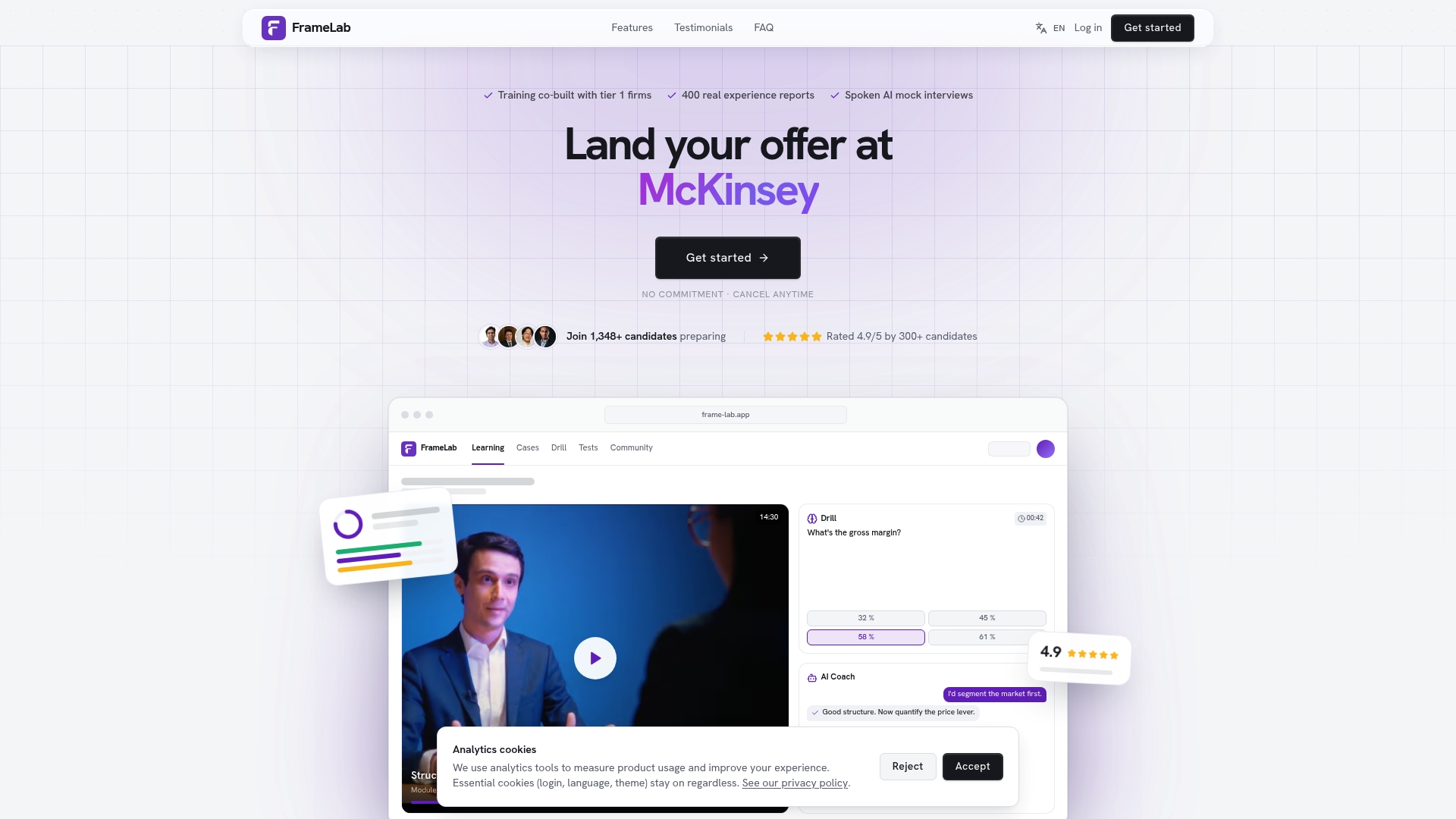
Frame-lab is built specifically for candidates who want both community-driven practice and expert-level structure in one place. The platform combines AI-driven mock interviews, over 400 curated experience reports from real consulting interviews, and a peer community for collaborative practice. You get personalized coaching that complements community sessions, plus training modules covering core frameworks, behavioral prep, and firm-specific expectations. Frame-lab's consulting interview preparation resources are continuously updated to reflect current interview formats at top-tier firms. Candidates who combine Frame-lab's structured tools with active community practice consistently report stronger performance and higher offer rates.
FAQ
What is the role of community support in interview prep?
Community support provides emotional encouragement, peer-led mock interview practice, and curated resource recommendations that together reduce anxiety and sharpen consulting interview skills. It functions as both a practice environment and an accountability system.
How many mock interviews should I do with community partners?
One documented case shows 40 mock interviews over six weeks leading directly to a job offer. Aim for at least two structured peer sessions per week throughout your preparation period.
How does community support help with behavioral interview questions?
Community groups practice the STAR method (Situation, Task, Action, Result) through live mock sessions where peers ask follow-up questions and challenge the logic of each response, building fluency that reading alone cannot produce.
How do I find the right community for consulting interview prep?
Join consulting-specific Slack groups and forums where members target the same firms and timelines as you. Prioritize communities where recently successful candidates are active and sharing current interview insights.
Can community support replace structured prep tools?
Community support and structured tools serve different functions. Peer networks provide practice volume and emotional resilience, while structured platforms like Frame-lab provide frameworks, feedback mechanisms, and firm-specific preparation depth. Both are needed for consistent results.