
Discover what a fit interview is and why it’s crucial for consulting careers. Learn how to thrive in cultural and job fit assessments.
On this page▾
- What is a fit interview, and why does it matter in consulting?
- What dimensions do consulting fit interviews evaluate?
- How does the fit interview process work at top consulting firms?
- How to prepare authentic, resilient stories for fit interviews
- Common fit interview questions and how to align your answers
- Key Takeaways
- The part of fit prep most candidates get wrong
- Frame-lab's fit interview training for consulting candidates
- FAQ
- What is a fit interview in consulting?
- How long does a consulting fit interview last?
- What are the most common fit interview questions?
- How is a fit interview different from a behavioral interview?
- How many stories should I prepare for a fit interview?
- Recommended
A fit interview is a structured assessment that measures how well your values, work style, and motivations align with a company's culture and the specific consulting role you are pursuing. Fit interview questions appear in nearly every consulting interview and carry weight comparable to case interviews. At firms like McKinsey, BCG, and Bain, this round is not a formality. It is a scored evaluation of named competencies, and failing it ends your candidacy regardless of how well you perform on cases.
What is a fit interview, and why does it matter in consulting?
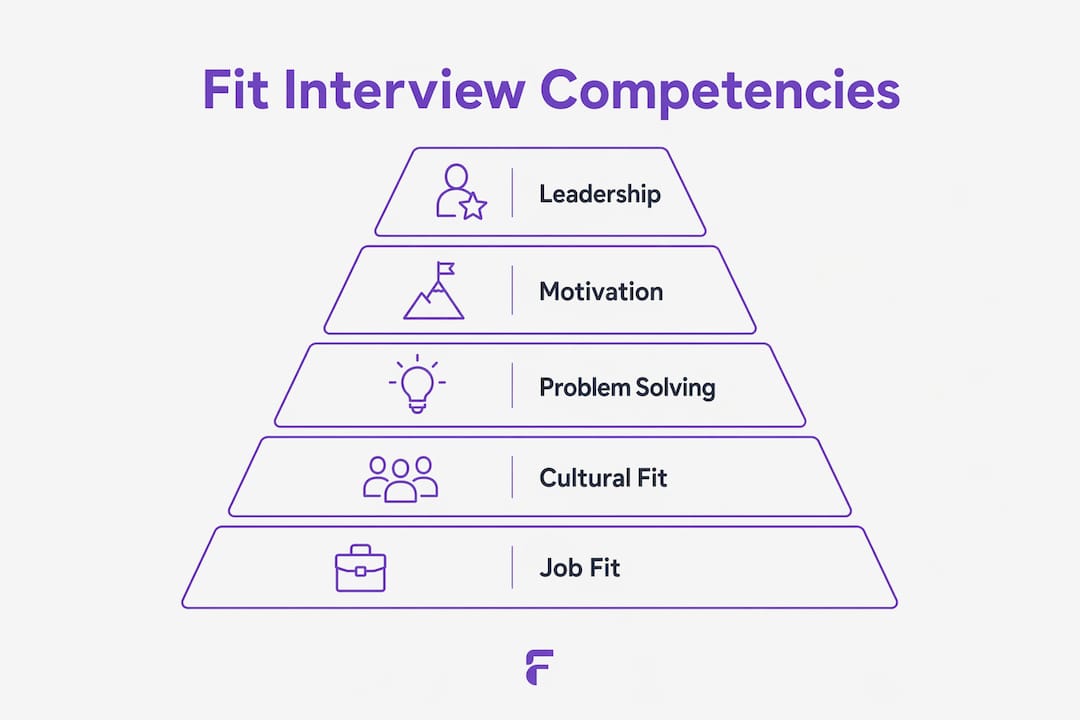
A fit interview evaluates both cultural fit and job fit. Cultural and job fit together assess a candidate's ability to thrive within company values and deliver on role expectations. That dual focus is what separates consulting fit interviews from the generic behavioral rounds you encounter in other industries.
The industry term for this format at McKinsey is the Personal Experience Interview, or PEI. The PEI is the most structured and well-documented version of the consulting fit interview, and understanding it gives you a reliable template for preparing across firms. BCG and Bain run similar rounds under different names, but the underlying logic is the same: prove your competencies through real stories from your past.

Fit interviews directly evaluate leadership, motivation, and problem-solving competencies that are distinct from generic behavioral interviews. The structure and transparency of consulting fit interviews allow focused preparation targeting named assessment dimensions. That transparency is actually an advantage. You know what they are looking for before you walk in.
What dimensions do consulting fit interviews evaluate?
McKinsey's PEI assesses candidates across three named dimensions. Each dimension maps to a specific type of behavior the firm expects from its consultants.
- Inclusive Leadership: You mobilized peers, built trust across a team, and achieved results through others rather than alone. Interviewers look for evidence that you can influence without authority and bring people along with you.
- Entrepreneurial Drive: You took full ownership of a problem, pushed past obstacles, and created measurable impact. This is not about working hard in general. It is about specific moments where you drove an outcome that would not have happened without you.
- Courageous Change: You identified a problem others avoided, held a position under pressure, or adjusted your view based on new evidence. This dimension tests intellectual honesty as much as boldness.
BCG and Bain assess similar qualities, though the labels differ slightly across firms. The core pattern holds: fit is not about personality type or likability. It is about demonstrated competencies you can point to with specific evidence. A candidate who says "I am a natural leader" without a story to back it up scores poorly. A candidate who describes a precise moment of leading a resistant team through a difficult decision scores well.
Fit interviews assess actionable leadership competencies that are distinct from general behavioral interviews. That distinction matters because it tells you exactly where to focus your preparation energy.
How does the fit interview process work at top consulting firms?
The fit interview process varies by firm, but the McKinsey PEI sets the standard for intensity and structure. Knowing what to expect in a fit interview at each firm lets you calibrate your preparation correctly.
- McKinsey PEI format: You open with a 90 - 120 second story in response to a single question. The interviewer then spends 15 - 25 minutes drilling into that story with follow-up questions. This is not a conversation. It is a structured interrogation of one experience.
- BCG and Bain format: These firms use a more conversational approach. Stories are shorter, and the follow-up questions are less intensive. You may cover two or three experiences in the same time McKinsey spends on one.
- Scoring: Both formats use scoring rubrics tied to named competencies. Your story is not just a narrative. It is evidence that gets rated against specific criteria by trained interviewers.
- Multiple rounds: Fit questions appear in every round at most top firms, not just one dedicated interview. Your stories need to hold up across multiple interviewers who may compare notes.
The drill-down phase tests real-time thinking with deep probing into story details, seeking specific internal motivations and alternative approaches. Failure to withstand drill-down questions often leads to interview failure even if the story is well memorized. That is the part most candidates underestimate.
Pro Tip: Practice your story out loud with a timer. If you cannot tell the opening in under 120 seconds without rushing, your story is too long. Cut the context and get to the action faster.
How to prepare authentic, resilient stories for fit interviews
Story preparation is the core of how to prepare for a fit interview. The goal is not to memorize a script. It is to know your experience so well that you can answer any follow-up question naturally and honestly.
- Use the STAR or SPAR framework as a scaffold. STAR stands for Situation, Task, Action, Result. SPAR adds Problem to the middle. Either framework gives your story a clear spine. The framework is invisible to the interviewer. What they hear is a coherent, purposeful account.
- Build "instrumented stories." Prepare stories with structured frameworks and many granular facts, including 12 - 15 precise details such as a colleague's facial expression or the exact number of people on the team. These details help you pass follow-up questions naturally because you are recalling, not inventing.
- Limit your portfolio to 3 - 5 versatile stories. Three to five highly detailed stories tagged for multiple consulting competencies produce better results than many loosely prepared stories. This approach reduces confusion and enables flexible answering during fit interviews.
- Tag each story for multiple dimensions. A single leadership experience might demonstrate Inclusive Leadership and Entrepreneurial Drive simultaneously. Know which dimensions each story can cover so you can adapt on the fly.
- Refresh your memory on the actual facts. Re-read old emails, project documents, or notes from the experience you plan to use. Top consulting firms detect coached candidates by testing detailed, specific facts in stories, emphasizing truthful recall over rehearsed scripts.
Over-polishing is a real risk. A story that sounds too smooth triggers skepticism. Interviewers at McKinsey are trained to spot candidates who have memorized a version of events rather than lived them.
Pro Tip: After you practice a story, ask a friend to ask you one random follow-up question you did not prepare for. If you freeze, you need more granular detail in your preparation, not more rehearsal of the opening.
Common fit interview questions and how to align your answers
Typical fit interview questions include "Describe a time you led without authority," "How did you handle a major setback," and "Tell me about a time you challenged the status quo." These questions target Inclusive Leadership, Drive, and Courageous Change respectively.
The table below shows how common question types map to consulting competencies and what a strong answer focuses on.
| Question type | Target dimension | What a strong answer demonstrates |
|---|---|---|
| "Led without authority" | Inclusive Leadership | Specific actions to build trust and mobilize others |
| "Handled a major setback" | Entrepreneurial Drive | Ownership, persistence, and measurable recovery |
| "Challenged the status quo" | Courageous Change | Evidence-based position, held under pressure |
| "Why consulting / why this firm" | Motivation and job fit | Specific knowledge of the firm's work and culture |
| "Greatest professional achievement" | Drive and impact | Quantified outcome tied to personal initiative |
Tailoring your answers to reflect firm values is not about flattery. It is about showing you understand what the role actually demands. A candidate who answers "Why McKinsey?" with generic praise for the brand signals poor preparation. A candidate who references a specific practice area or a published piece of the firm's work signals genuine interest and research.
Focus your answers on your individual actions and their outcomes. Consulting firms want to know what you did, not what your team accomplished. Phrases like "we decided" or "the team achieved" dilute your story. Replace them with "I proposed," "I convinced," and "I delivered."
You can strengthen your preparation by reviewing transferable skills strategies that help you frame past experiences in consulting-relevant terms.
Key Takeaways
A fit interview is a scored competency assessment, not a personality check, and preparing specific, detail-rich stories across three named dimensions is the most reliable path to passing it.
| Point | Details |
|---|---|
| Fit interviews are scored assessments | Interviewers rate your stories against named competencies like Inclusive Leadership and Drive. |
| McKinsey's PEI is the most intensive format | Expect a 90 - 120 second opening story followed by 15 - 25 minutes of drill-down questions. |
| Limit your story portfolio | Three to five detailed, multi-use stories outperform a large collection of loosely prepared ones. |
| Granular details protect you | Specific facts like names, numbers, and reactions help you answer follow-up questions naturally. |
| Individual actions win | Replace "we" language with first-person actions and measurable outcomes in every answer. |
The part of fit prep most candidates get wrong
Most candidates I have worked with treat the fit interview as the easier half of consulting prep. They spend 80% of their time on cases and squeeze in story practice the week before the interview. That is a mistake that costs real offers.
The McKinsey drill-down is genuinely difficult. I have seen candidates with polished, well-structured stories fall apart at the third follow-up question because they had rehearsed the surface of an experience without re-living the details. The interviewer asks, "What was going through your mind when your manager pushed back?" and the candidate goes blank. That blank is what fails you, not a weak opening.
The fix is not more rehearsal. It is deeper recall. Go back to the source material of your story. Read the emails. Look at the project timeline. Remember the specific people involved and what they said. When you know the experience at that level of detail, the drill-down becomes a conversation rather than a trap.
The other mistake is treating fit as separate from case prep. The best consulting candidates I know prepare both in parallel, because the mindset is the same: structured thinking, clear communication, and the ability to stay composed under pressure. Preparation genuinely reduces interview anxiety, and reducing that fear starts with knowing your stories as well as you know your frameworks.
View the fit interview as storytelling plus conversation. Your story is the opening argument. The drill-down is the cross-examination. Prepare for both, and you will be ready for whatever the interviewer brings.
Frame-lab's fit interview training for consulting candidates
Fit interview preparation requires more than reading sample questions. It requires practicing your stories under realistic conditions and getting feedback that mirrors what actual interviewers notice.
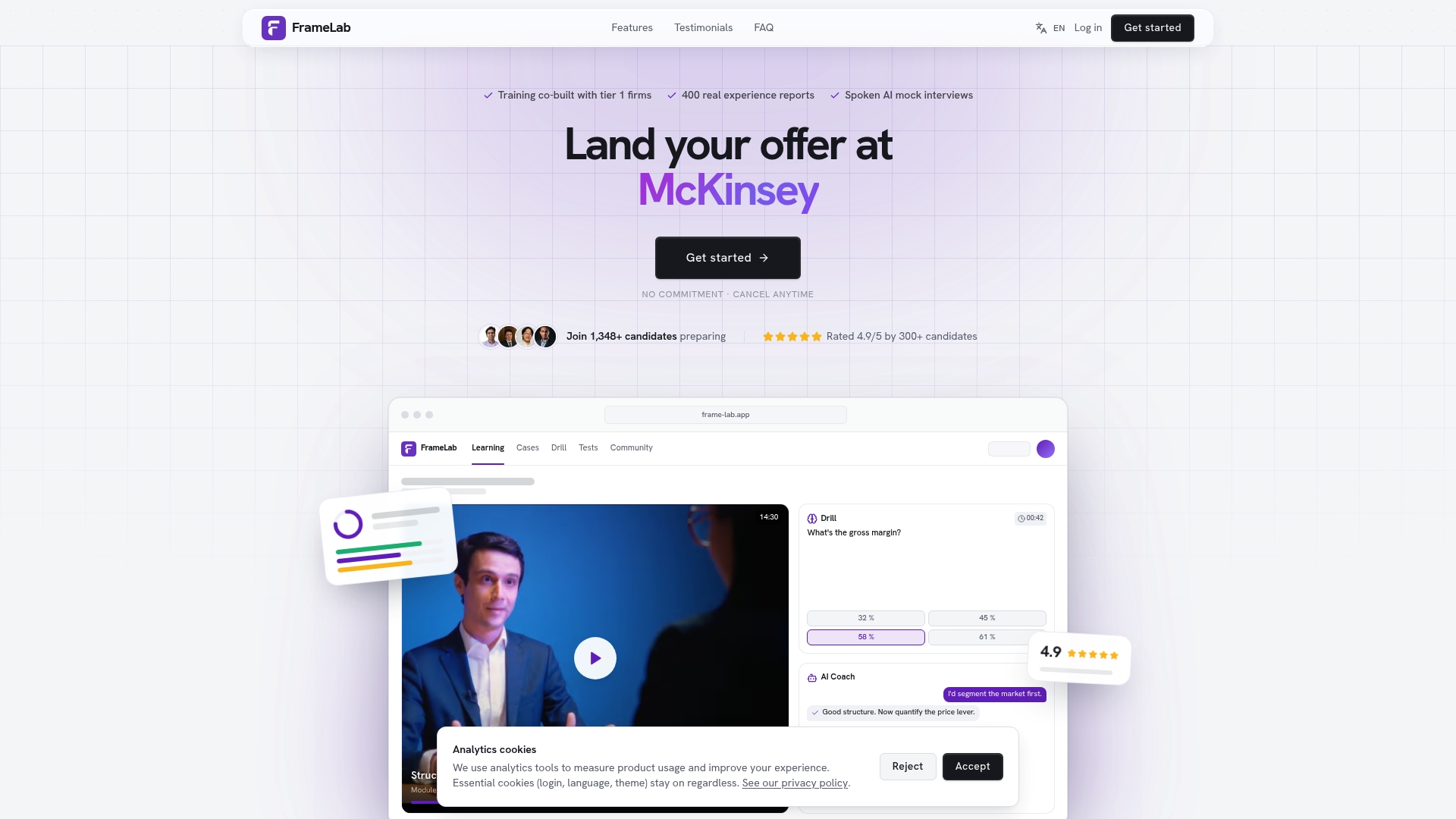
Frame-lab offers a dedicated fit interview learning module built specifically for candidates targeting McKinsey, BCG, and Bain. The module covers story development using proven frameworks, drill-down simulation, and feedback on the specific competency signals interviewers score. Frame-lab's library of over 400 real interview experience reports lets you see exactly how past candidates handled the questions you will face. If you want structured preparation that builds both your stories and your confidence before the real thing, Frame-lab's consulting interview training gives you the tools to get there.
FAQ
What is a fit interview in consulting?
A fit interview is a structured assessment that evaluates your values, motivations, and work style against a firm's culture and role requirements. At McKinsey, it is called the Personal Experience Interview and focuses on three named competencies.
How long does a consulting fit interview last?
The McKinsey PEI typically runs 20 - 30 minutes total, with 15 - 25 minutes dedicated to drill-down questions on a single story. BCG and Bain fit rounds are generally shorter and more conversational.
What are the most common fit interview questions?
Common questions include "Describe a time you led without authority," "Tell me about a major setback you overcame," and "Give an example of when you challenged the status quo." Each targets a specific consulting competency.
How is a fit interview different from a behavioral interview?
A consulting fit interview evaluates named, scored competencies like Inclusive Leadership and Entrepreneurial Drive, while a standard behavioral interview uses broader, less structured criteria. The consulting version is more intensive and includes deep follow-up questioning.
How many stories should I prepare for a fit interview?
Prepare three to five highly detailed stories, each tagged for multiple competencies. This focused approach produces more flexible and convincing answers than preparing a large number of loosely developed stories.