
Discover why preparation reduces interview fear for consulting candidates. Learn techniques to build confidence and ace your interviews.
On this page▾
- Why preparation reduces interview fear: the psychological mechanism
- Does strategic preparation lower interview nerves more than over-preparation?
- What practical techniques build confidence and manage anxiety during consulting interviews?
- Mock interviews as gradual exposure
- Pre-interview routines that regulate the nervous system
- How does preparation benefit consulting candidates in case and fit interviews?
- Key Takeaways
- What I have learned coaching candidates through consulting interview fear
- Frame-lab's consulting interview training targets exactly this kind of preparation
- FAQ
- Why does preparation reduce interview fear?
- How many STAR stories should I prepare for a consulting interview?
- Does mock interview practice actually lower anxiety?
- What is the difference between strategic preparation and over-preparation?
- Can I eliminate interview anxiety completely through preparation?
- Recommended
Preparation reduces interview fear by replacing fear of the unknown with familiarity, which builds certainty and lowers anxiety. For consulting candidates facing McKinsey or BCG interviews, that shift is not motivational advice. It is a neurological process you can train deliberately. The standard industry term for this process is stress inoculation, and it works by exposing your brain to interview conditions repeatedly until those conditions stop registering as threats. This article explains why preparation reduces interview fear at a psychological level, how to prepare strategically rather than excessively, and which techniques produce the most reliable results for case and fit interviews.
Why preparation reduces interview fear: the psychological mechanism
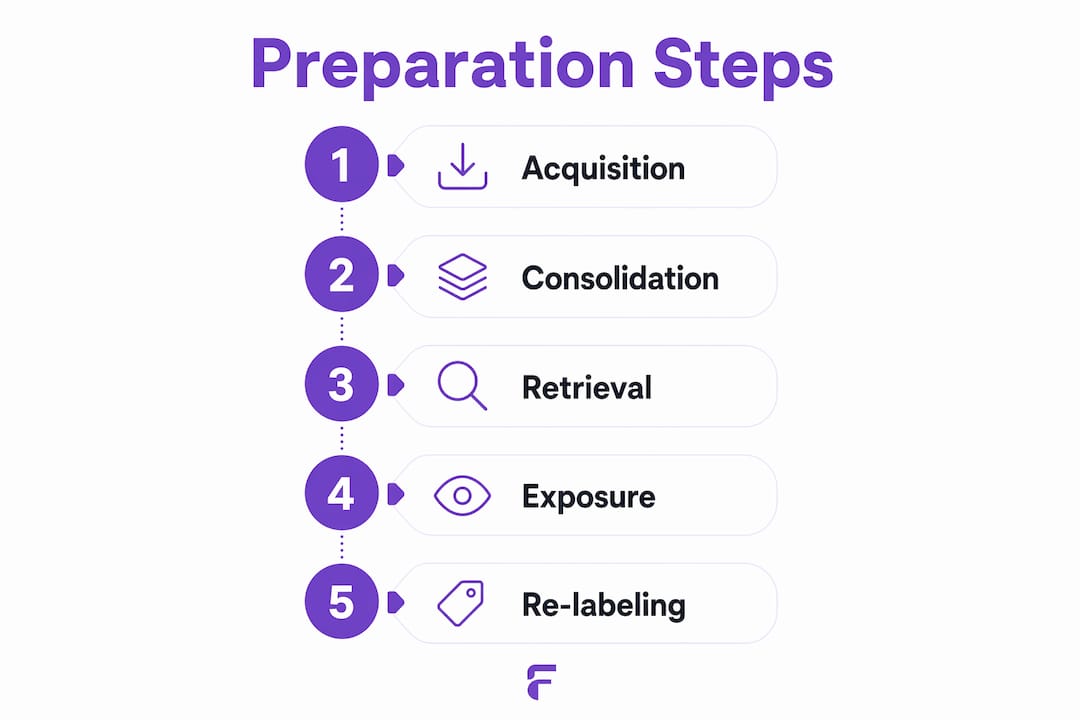
Preparation lowers interview anxiety through the same principles that clinical psychologists use in exposure therapy. Fear extinction works not through willpower but through repeated, controlled contact with a feared situation. Each time you practice an interview, your brain acquires a new safety memory. Over time, those memories override the threat response.
The process has three stages: acquisition, consolidation, and retrieval of safety memories. Acquisition happens during the practice session itself. Consolidation occurs during sleep and rest afterward. Retrieval is what fires during the actual interview, calming your nervous system before you even answer the first question. Skipping practice sessions breaks this chain.

There is also a cognitive load dimension. Stress and observation reduce cognitive processing efficiency during interviews. Performance drops sharply when candidates are observed versus solving problems privately. Preparation builds familiarity with the material, which frees up working memory to handle pressure instead of burning it on basic recall.
One underused technique is threat re-labeling. Shifting the mental label from "anxiety" to "performance readiness" leverages the physiological overlap between the two states. Your heart rate rises before both a threat and an exciting challenge. The label you assign determines how your brain interprets the signal.
Pro Tip: Before your next mock interview, say out loud: "I am ready to perform." That single reframe activates a different neural pathway than "I am nervous."
Does strategic preparation lower interview nerves more than over-preparation?
Over-preparation is a real problem, and it produces anxiety rather than reducing it. Candidates who memorize 20 stories for every conceivable question end up with cluttered recall and higher cognitive load during the interview itself. The goal of preparation is reliable retrieval, not volume.
University of Pennsylvania Career Services recommends limiting your story set to 5 - 6 core STAR stories built around common themes: challenge, leadership, failure, success, and performance under pressure. That constraint is deliberate. A smaller, well-rehearsed set produces faster, cleaner recall under stress.
The table below compares strategic preparation with over-preparation across four dimensions:
| Dimension | Strategic preparation | Over-preparation |
|---|---|---|
| Story count | 5 - 6 core STAR stories | 15+ stories across many scenarios |
| Cognitive load | Low, freeing mental bandwidth for follow-ups | High, increasing retrieval errors under pressure |
| Anxiety level | Decreases as familiarity builds | Increases as candidate tries to memorize everything |
| Recall under stress | Reliable, theme-based retrieval | Fragmented, context-dependent recall |
The key insight is that converting ambiguous questions into prepared templates lowers cognitive load and nervousness simultaneously. When a McKinsey interviewer asks "Tell me about a time you led through ambiguity," a candidate with a theme-based STAR story retrieves it in under two seconds. A candidate with 20 loosely memorized stories spends those two seconds searching.
- Build one story per theme, not one story per possible question.
- Use retrieval cues (a single keyword per story) to trigger recall quickly.
- Practice retrieving stories in random order to simulate real interview unpredictability.
- Review stories aloud, not silently, to train the verbal delivery pathway.
Pro Tip: Label each STAR story with a one-word cue ("bridge," "turnaround," "pivot") and practice retrieving the full story from that cue alone. This mirrors how memory works under pressure.
The same logic applies to the case: the more cases close to the ones firms use you have solved, the less the unknown weighs.
What practical techniques build confidence and manage anxiety during consulting interviews?
Concrete preparation techniques produce measurable anxiety reduction. The most effective ones combine gradual exposure, physical regulation, and logistical control.
Mock interviews as gradual exposure
Mock interviews lower anxiety by gradually exposing candidates to interview conditions, helping the brain learn safety. The key word is "gradually." A first mock interview with a peer feels uncomfortable. A fifth mock interview with a stranger feels manageable. A tenth mock interview under timed conditions feels familiar. Each session adds a safety memory.
For consulting candidates, mock interviews should simulate the actual format. Practice case interviews with a structured framework response, not just a verbal walkthrough. Practice fit questions with a timer running. The closer the simulation to the real event, the stronger the safety memory your brain builds.
Pre-interview routines that regulate the nervous system
- Controlled breathing. Four counts in, hold for four, out for four. This activates the parasympathetic nervous system and reduces cortisol within 90 seconds.
- Power posture. Standing upright with shoulders back for two minutes before entering the room raises confidence and lowers stress hormones, according to research on postural feedback.
- Mental reframe. Replace "I hope I don't freeze" with "I have practiced this exact scenario." The specificity of the reframe matters.
- Physical preparation. Managing physical symptoms through sleep, nutrition, and light exercise the day before reduces distracting sensations during the interview itself.
- Logistical preparation. Removing external stressors like tech failures or late arrivals prevents cortisol spikes that impair cognition before the interview even starts. Test your video setup the night before. Know the building entrance. Arrive 15 minutes early.
Pro Tip: Do a full dress rehearsal the evening before your interview. Wear the outfit, open the video platform, and run through two STAR stories aloud. This collapses the gap between practice and performance.
How does preparation benefit consulting candidates in case and fit interviews?
Consulting interviews have two distinct formats, and each responds to preparation differently. Case interviews test structured thinking under pressure. Fit interviews test self-awareness and communication. Both reward candidates who have built procedural recall through deliberate practice.
Consulting interview anxiety reduces most when candidates train procedural recall by simulating real interview follow-ups and sequencing answers under pressure. That means practicing not just the opening framework of a case but the full sequence: problem definition, hypothesis, analysis, recommendation, and pushback response.
Key preparation priorities by interview type:
- Case interviews: Practice applying frameworks like profitability analysis or market sizing to real cases. Familiarity with the structure reduces the cognitive cost of applying it under observation. Frame-lab's case interview training covers this sequencing in detail.
- Fit interviews: Build theme-based STAR stories and practice delivering them in under 90 seconds. The FIT Interview module on Frame-lab is built specifically for this format.
- Follow-up questions: Practice answering "Why that approach?" and "What would you do differently?" These are the moments most candidates freeze, and they are entirely predictable.
The table below maps preparation techniques to consulting interview formats:
| Interview type | Core preparation technique | Anxiety reduction mechanism |
|---|---|---|
| Case interview | Framework rehearsal with full sequencing | Reduces cognitive load during live problem-solving |
| Fit interview | Theme-based STAR story retrieval | Converts unknown questions into familiar templates |
| Follow-up questions | Deliberate practice of pushback responses | Builds safety memory for high-pressure moments |
Key Takeaways
Preparation reduces interview fear by building familiarity, lowering cognitive load, and training your brain to recognize interview conditions as safe rather than threatening.
| Point | Details |
|---|---|
| Preparation replaces uncertainty | Familiarity with interview conditions calms the threat response before the interview begins. |
| Strategic beats excessive | Five to six core STAR stories produce faster, cleaner recall than memorizing 20 loosely connected scenarios. |
| Mock interviews build safety memories | Repeated exposure to interview conditions teaches the brain that the situation is manageable, not dangerous. |
| Physical and logistical prep matters | Controlling sleep, breathing, and logistics prevents cortisol spikes that impair cognition during the interview. |
| Consulting formats reward procedural recall | Practicing full case sequences and fit story delivery under timed pressure produces the most reliable anxiety reduction. |
What I have learned coaching candidates through consulting interview fear
Most candidates I work with arrive believing their anxiety is a character flaw. It is not. It is a predictable response to uncertainty, and uncertainty is exactly what preparation removes.
The mistake I see most often is over-memorization. Candidates rehearse a story so many times that they can only recall it in one fixed sequence. The moment an interviewer interrupts or asks a follow-up, the whole structure collapses. Flexible recall, built through varied practice, is what actually holds up under pressure.
The second mistake is ignoring physical symptoms. Dry mouth, racing heart, and shallow breathing are not signs that you are failing. They are signs that your body is preparing to perform. The candidates who manage these symptoms best are the ones who have practiced their breathing routine as deliberately as their STAR stories.
Realistic expectations matter here. Anxiety will not disappear entirely, and you should not want it to. A moderate level of arousal sharpens focus and speeds up processing. The goal of preparation is not to eliminate nervousness but to keep it at a level where it helps rather than hinders. That threshold is reachable with the right preparation, and most candidates reach it faster than they expect.
Frame-lab's consulting interview training targets exactly this kind of preparation
Reducing interview anxiety requires the right practice environment, not just more hours of solo study.
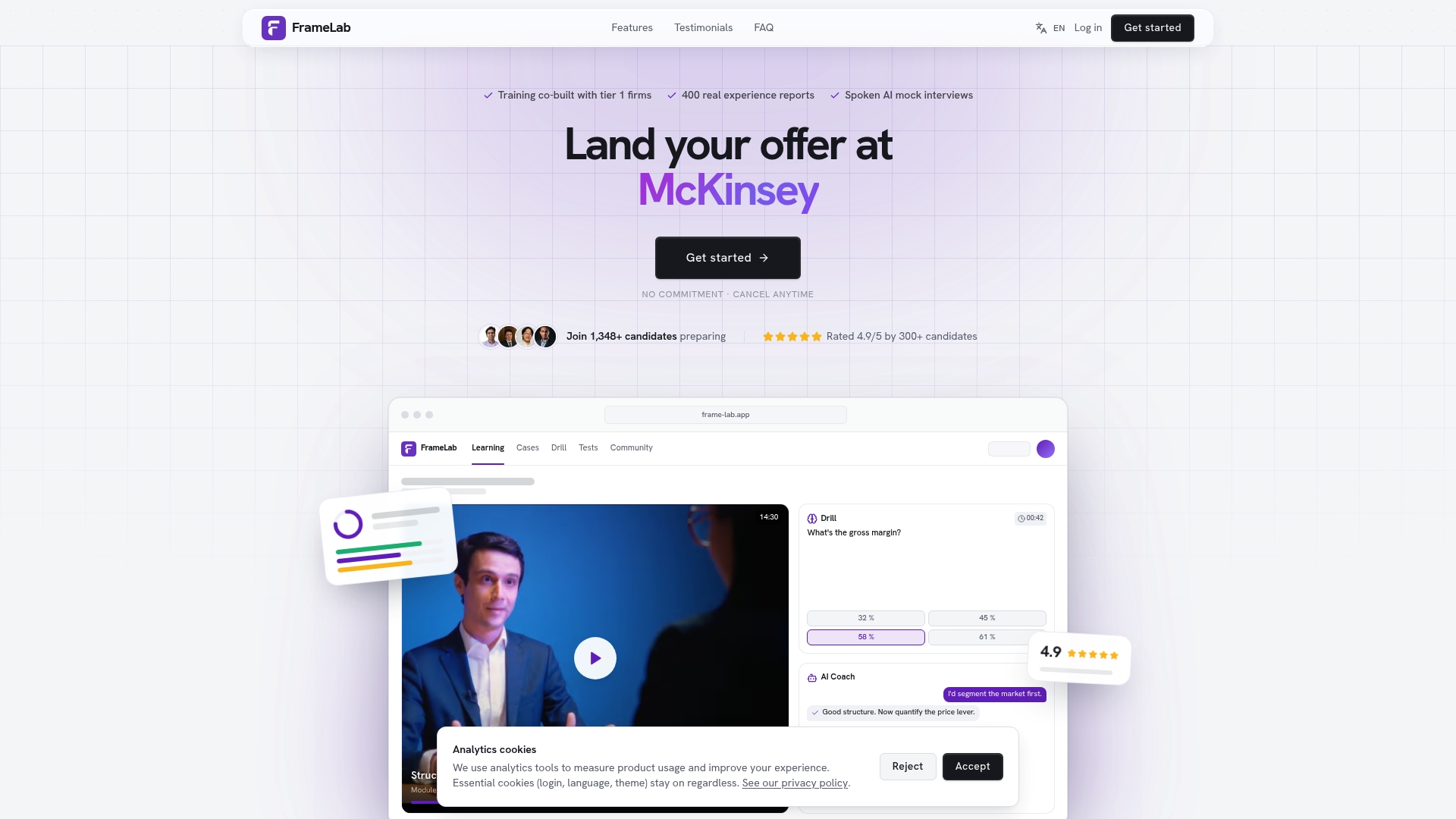
Frame-lab is built specifically for consulting candidates preparing for McKinsey, BCG, and similar firms. The platform combines AI-driven mock interviews, over 400 curated experience reports from real interviews, and a peer community for live practice. Each training module focuses on building the procedural recall and theme-based story retrieval that lower anxiety most effectively. The FIT Interview module walks you through STAR story construction by theme, and the full consulting training program simulates the pressure of real case and fit interviews so that the actual interview feels familiar, not foreign.
FAQ
Why does preparation reduce interview fear?
Preparation replaces fear of the unknown with familiarity, which lowers the brain's threat response. Strategic preparation builds certainty and reduces anxiety by converting unpredictable questions into familiar templates.
How many STAR stories should I prepare for a consulting interview?
Five to six core STAR stories covering key themes like challenge, leadership, and failure is the recommended range. This limits cognitive load and produces faster, more reliable recall under pressure.
Does mock interview practice actually lower anxiety?
Yes. Repeated mock interview exposure teaches your brain that interview conditions are safe, reducing the threat response through the same mechanism as clinical exposure therapy.
What is the difference between strategic preparation and over-preparation?
Strategic preparation builds a small, well-rehearsed story set with theme-based retrieval cues. Over-preparation creates a large, loosely memorized story bank that increases cognitive load and fragmented recall under stress.
Can I eliminate interview anxiety completely through preparation?
No, and that is not the goal. A moderate level of arousal improves focus and performance. Preparation keeps anxiety at a productive level rather than eliminating it entirely.