
Discover why interviewers test under pressure and learn how to master stress interviews. Boost your chances of success in consulting roles.
On this page▾
- Why interviewers test under pressure in consulting
- What pressure tactics do interviewers actually use?
- Do pressure interviews actually predict job performance?
- How to excel when interviewers test you under stress
- Key Takeaways
- Pressure interviews are a two-way signal
- Frame-lab's training for high-pressure consulting interviews
- FAQ
- Why do interviewers use pressure tactics in consulting interviews?
- What is a stress interview?
- Do pressure interviews accurately predict job performance?
- How should I respond when an interviewer goes silent after my answer?
- How can I prepare for pressure interview tactics before the interview?
- Recommended
Stress interviews are a deliberate method interviewers use to simulate real job pressure and observe how candidates think, react, and recover when conditions turn hostile. 92% of U.S. adults report anxiety during job interviews. That baseline anxiety is exactly what interviewers exploit to reveal whether you can manage composure, make clear decisions, and maintain structured reasoning when the stakes feel high. For consulting candidates targeting firms like McKinsey and BCG, understanding why interviewers test under pressure is not optional. It is the difference between performing well and falling apart at the moment that matters most.
Why interviewers test under pressure in consulting
Consulting firms use pressure tactics because the job itself is relentless. Client meetings turn adversarial. Partners challenge your logic in real time. Deadlines compress your thinking. Interviewers replicate those conditions deliberately to see which candidates hold up and which ones crumble.
The core qualities a pressure interview assesses include:
- Emotional regulation. Can you stay calm when an interviewer interrupts you mid-sentence or dismisses your answer without explanation?
- Logical clarity under stress. Does your reasoning stay structured when someone fires three questions at you in rapid succession?
- Adaptability. Can you pivot your approach when new information contradicts your initial assumption?
- Recovery from mistakes. Do you acknowledge an error and correct course, or do you double down defensively?
- Intellectual honesty. Will you admit uncertainty rather than bluff your way through a gap in your knowledge?
These qualities map directly to real consulting workplace demands. A first-year analyst who freezes when a partner pushes back on a slide is a liability. An interviewer who sees that freeze in a 45-minute session will not take that risk.
Pro Tip: When you feel the urge to fill silence with words, pause instead. Silence signals confidence. Rambling signals panic.

What pressure tactics do interviewers actually use?
Interviewers apply pressure through specific, repeatable techniques. Each one targets a different behavioral response. Recognizing them in real time is the first step to neutralizing them.
- Rapid-fire questioning. The interviewer asks multiple questions without waiting for full answers. The goal is to see whether you prioritize and stay coherent or scatter your thinking across all of them at once.
- Deliberate long silences. After you answer, the interviewer says nothing. Most candidates interpret silence as disapproval and start revising their answer unprompted. The interviewer watches whether you hold your position or abandon it under social pressure.
- Interruptions and repeated challenges. The interviewer cuts you off and asks "Why?" or "Are you sure?" repeatedly. This tests whether you can defend your reasoning calmly or collapse under repeated scrutiny.
- Hostile or dismissive tone. A flat, skeptical tone signals that your answer is wrong, even when it is not. This is sometimes called gaslighting in interview contexts. Hostile pressure interviews evaluate your resistance to false signals and your ability to stay grounded in your own analysis.
- Deliberate de-escalation. After a period of hostility, the interviewer suddenly becomes warm and collaborative. This shift tests whether you can recover your professional tone quickly and return to structured problem-solving.
The common thread across all these tactics is pace control. Interviewers use pressure to assess stress management, problem-solving, and resilience by forcing you off your prepared rhythm and watching what happens next.
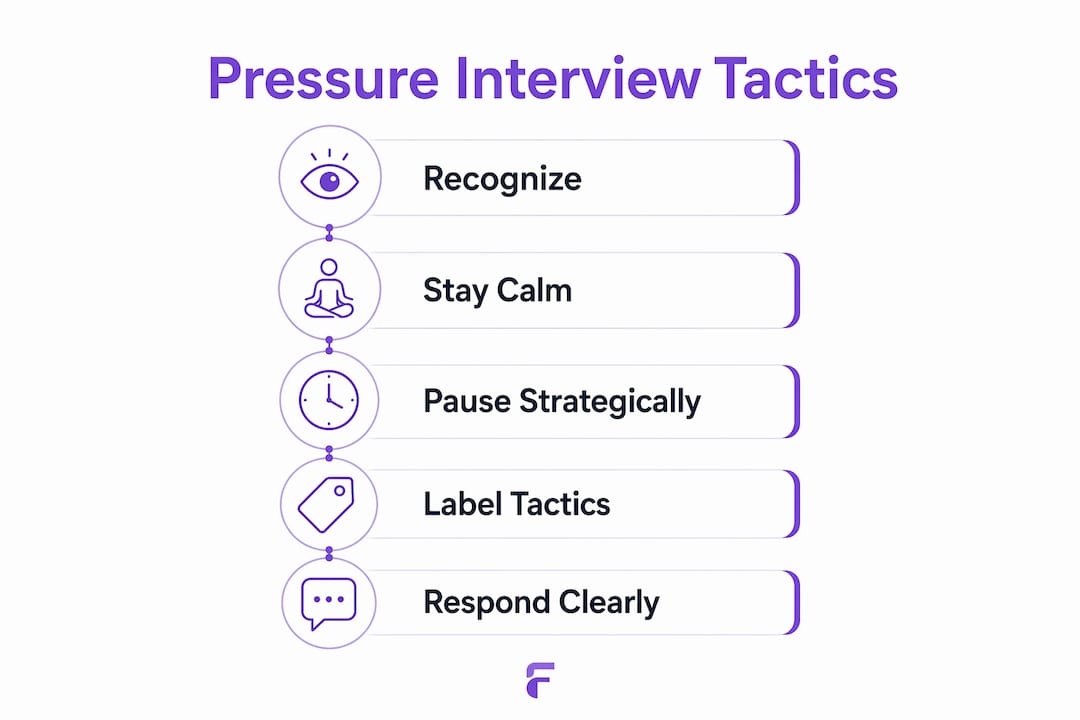
Pro Tip: Label each tactic mentally as it happens. When you recognize "that was a silence tactic," your brain shifts from emotional reaction to analytical mode. That shift is the whole game.
Do pressure interviews actually predict job performance?
The honest answer is: sometimes, but not always. The effectiveness of pressure testing depends entirely on how it is designed.
Decades of research criticize unstructured brainteaser questions for having low predictive validity. These questions often measure how familiar a candidate is with the format, not how well they will perform on the job. A candidate who has practiced brainteasers 50 times will outperform a more capable candidate who has not. That is a measurement problem, not a talent signal.
Several specific critiques apply to poorly designed pressure assessments:
- Cognitive overload reduces reasoning. Extreme pressure does not reveal thinking. It shuts it down. A candidate who goes blank under an unnecessarily hostile interviewer is not showing their real capability.
- Verbalization bias. Pressure to think aloud constantly creates a cognitive bottleneck. Thinking aloud under stress reduces reasoning capacity because the brain splits its resources between solving and narrating simultaneously.
- Social performance over substance. Candidates who are naturally extroverted or who have practiced performing under pressure will score better than introverted candidates with stronger analytical skills. That gap does not reflect job performance.
"The best-designed pressure assessments focus on realistic, job-relevant stress rather than artificial hostility. They test recovery and reasoning, not the ability to perform confidence under attack."
The implication for you as a candidate is clear. You should not try to perform composure. You should build it. The difference shows up in how you handle a real curveball, not a scripted one.
How to excel when interviewers test you under stress
Preparation for pressure interviews requires more than reading about tactics. You need to rehearse specific mental and behavioral responses until they become automatic. Here is what actually works.
- Reframe hostility as simulation. Viewing hostile questions as professional simulations rather than personal attacks keeps your reasoning online. Tell yourself: "This is a test of my recovery, not a verdict on my intelligence."
- Speak 10% slower than feels natural. Slower speech pacing keeps you in control and prevents panic-induced incoherence. When stress hits, your natural instinct is to speed up. Resist it deliberately.
- Pause before you verbalize. Brief internal pauses improve cognitive processing under stress. Three seconds of silence before answering is not weakness. It is structure.
- Label pressure tactics in real time. Mentally labeling tactics as they happen creates psychological distance from emotional reactivity. "That was a silence tactic" shifts your brain from threat response to strategic thinking.
- Prioritize honest reasoning over perfect answers. Interviewers at top consulting firms know when you are bluffing. A clear "I am not certain, but here is how I would approach it" outperforms a confident wrong answer every time.
- Practice under realistic conditions. Reading about pressure is not the same as experiencing it. You need to replicate real interview conditions with timed drills, adversarial mock sessions, and feedback on your recovery behavior.
Pro Tip: After each mock session, review the moments where you felt most rattled. Those are your training targets, not your failures.
The table below maps the most common pressure scenarios to the skill being tested and the response that signals strength.
| Pressure scenario | Skill being assessed | Strong candidate response |
|---|---|---|
| Rapid-fire questions | Prioritization and clarity | Answer the most critical question first, then address others |
| Long silence after your answer | Confidence and self-trust | Hold your position unless you have a genuine reason to revise |
| Repeated "Why?" challenges | Logical defense and composure | Restate your reasoning calmly with one additional supporting point |
| Hostile or dismissive tone | Emotional regulation | Maintain a neutral, professional tone without mirroring hostility |
| Sudden warmth after hostility | Recovery and adaptability | Re-engage collaboratively without referencing the earlier tension |
Key Takeaways
Pressure interviews in consulting test emotional regulation, logical clarity, and recovery ability because those skills predict real job performance far better than rehearsed answers.
| Point | Details |
|---|---|
| Pressure reveals real behavior | Stress tactics expose composure and reasoning that polished answers cannot fake. |
| Tactics follow patterns | Silence, rapid-fire questions, and tone shifts each target a specific behavioral response. |
| Not all pressure tests are valid | Brainteasers and artificial hostility often measure practice exposure, not true ability. |
| Slower speech controls pace | Speaking 10% slower than natural prevents panic and keeps your reasoning coherent. |
| Authentic recovery beats performance | Admitting uncertainty and correcting course signals more strength than a confident wrong answer. |
Pressure interviews are a two-way signal
I have reviewed hundreds of consulting interview debrief reports, and the pattern is consistent. Candidates who crack under pressure almost never crack because they lack intelligence. They crack because they interpret the interviewer's tactics as a verdict rather than a test. That single misread costs them the offer.
The most composed candidates I have seen share one habit: they manage interview nerves before they walk in the door, not during the interview itself. They have already decided how they will respond to silence, to hostility, and to being wrong. The decision is made in advance, so the moment does not catch them off guard.
There is also something worth saying about the interview as a dialogue. When you handle pressure well, you are not just passing a test. You are showing the interviewer what it will feel like to work with you when a client pushes back in a board room. That is a leadership signal. Firms hire people they can put in front of difficult clients. Pressure interviews are the closest proxy they have for that scenario.
The candidates who stand out are not the ones who never feel rattled. They are the ones who feel it and keep thinking anyway. That is what you are training for.
Frame-lab's training for high-pressure consulting interviews
Pressure is a skill you build through repetition, not a trait you either have or do not.
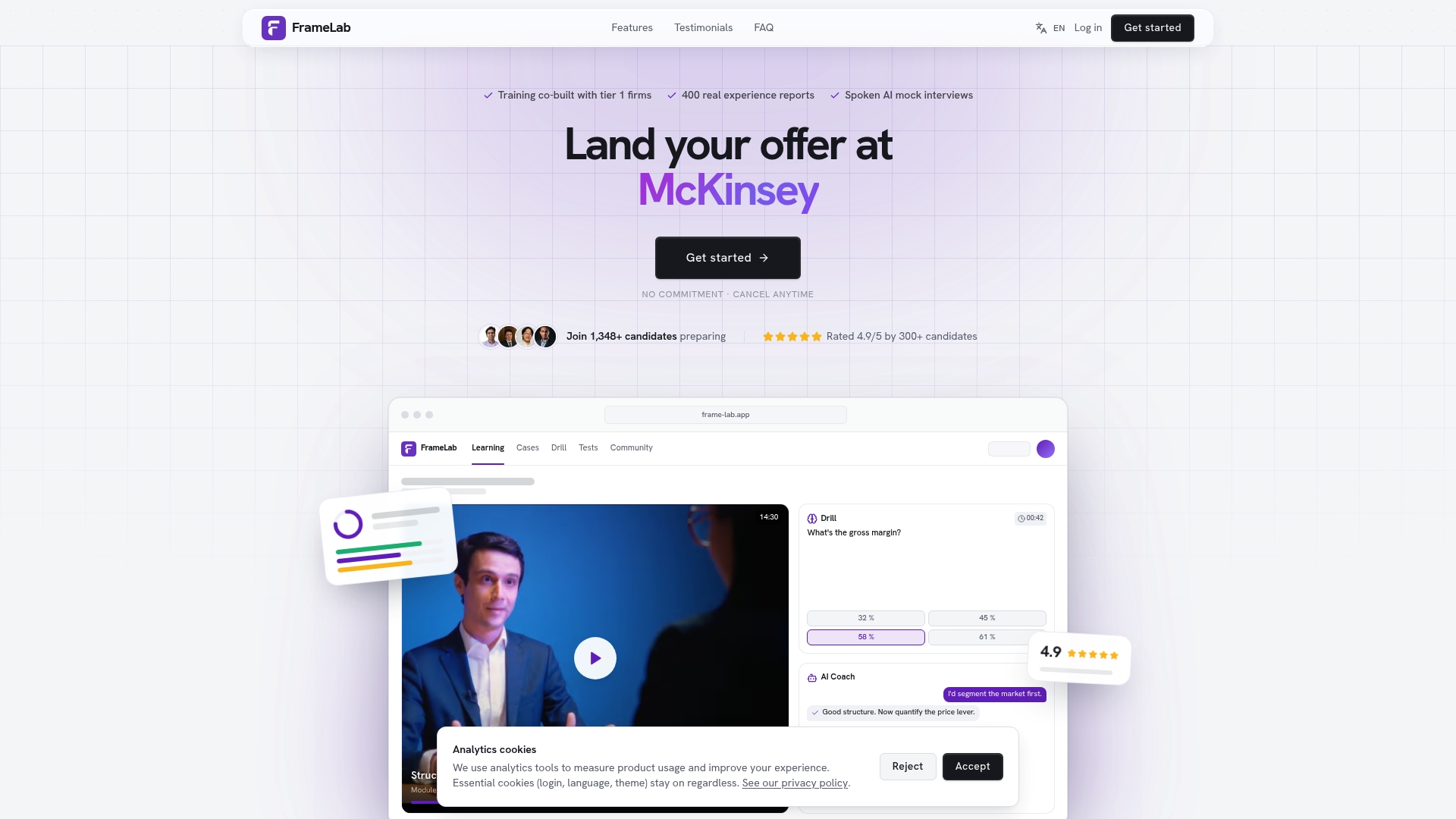
Frame-lab is built specifically for consulting candidates preparing for firms like McKinsey and BCG. The platform's FIT interview training puts you through behavioral and pressure scenarios with structured feedback on your composure, pacing, and recovery. The case reflexes module trains you to apply frameworks quickly under timed, adversarial conditions. With over 400 curated experience reports from real interviews, you practice against the actual tactics firms use, not generic simulations. Frame-lab gives you the repetitions you need to walk into a pressure interview with a plan already in place.
FAQ
Why do interviewers use pressure tactics in consulting interviews?
Interviewers use pressure tactics to simulate the real demands of consulting work, where client meetings and partner reviews are often adversarial. The goal is to assess whether candidates can maintain composure, think clearly, and recover from mistakes under stress.
What is a stress interview?
A stress interview is a structured format where the interviewer deliberately creates discomfort through hostile tones, rapid-fire questions, long silences, or repeated challenges. The technique is designed to reveal behavioral responses that polished answers cannot show.
Do pressure interviews accurately predict job performance?
Not always. Unstructured brainteaser questions have low predictive validity and often measure prior exposure to the format rather than genuine ability. Well-designed pressure assessments that use realistic, job-relevant scenarios are far more reliable.
How should I respond when an interviewer goes silent after my answer?
Hold your position. Silence is a deliberate tactic to test whether you abandon a correct answer under social pressure. Revise only if you have a genuine logical reason to do so, not because the silence feels uncomfortable.
How can I prepare for pressure interview tactics before the interview?
Practice under realistic conditions with timed, adversarial mock sessions and review the moments where you felt most rattled. Frame-lab's consulting interview preparation platform offers structured drills and real interview experience reports to build that familiarity before the actual interview.